
Colorado’s unpredictable spring and summer hailstorms have a well-earned reputation for leaving roof damage in their wake. If you spot dents, cracked shingles, or dark granules collecting in your gutters after a storm, you might find yourself asking whether a roof repair will solve the problem, or if a complete replacement is necessary. With hail impacts varying in severity, and every roof aging differently across neighborhoods, it’s important to know how to make the right choice for your home.
How Roof Age and Material Impact Your Decision
Age is one of the most important factors when assessing storm damage. If your roof is less than 10 years old and properly installed, it is often resilient enough for a targeted repair. Premium asphalt shingles and quality tile roofing, when still within their expected lifespan, may only need patching or a small section replaced, especially if damage is limited to a single slope or area.
However, older roofs are usually less resistant to storm impacts. Roofs approaching or past 20 years frequently have weakened materials, missing protective granules, and a compromised waterproof layer beneath the shingles. In these cases, hail strikes can create pathways for water intrusion that make spot repairs ineffective. If your roof in Colorado is showing widespread signs of aging, roof replacement is likely the best long-term choice.
Evaluating the Extent of Hail Damage
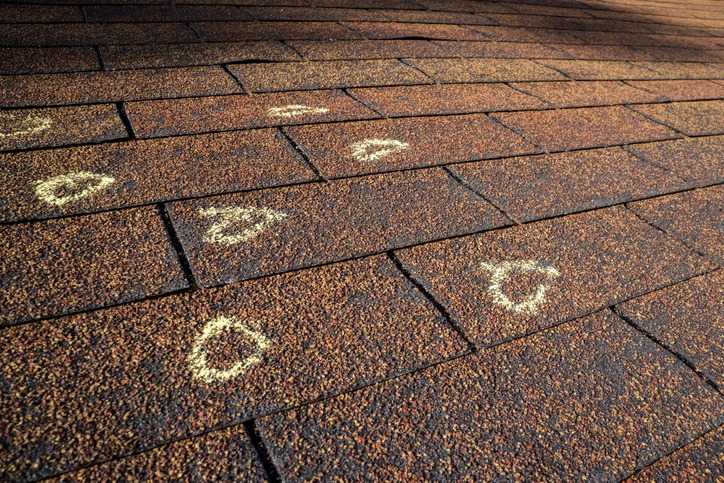
Not all hail damage is equal. Large hailstones cause deep bruises or even puncture holes, but even smaller hail can dislodge shingle granules or create cracks that grow over time. You should look for:
-
Multiple shingles with visible cracks or bruising
-
Soft spots that give way under light pressure (a sign the underlying mat is fractured)
-
Exposed or dented flashing
A handful of bruised or cracked shingles may be resolved with a roof repair, but if you see consistent damage across multiple areas or entire slopes, the cumulative effect can weaken the roof’s integrity. This scenario often points toward needing a full roof replacement to preserve your home’s protection against future Colorado storms.
The Role of Shingle Condition and Water Leaks
Your shingles’ general condition tells an important story. Well-bonded, flexible shingles without granule loss are more likely to benefit from repairs after modest hail damage. But if you’re already seeing curling, loose tabs, or widespread granule loss, hail will only accelerate shingle deterioration.
Active leaks or water stains inside your attic or living spaces are another clear warning sign. Even a small leak, if left unaddressed after a hailstorm, can escalate into significant decking or structural damage. In these cases, repairs might be only temporary, so considering prompt storm restoration is essential to protect your investment.
Looking Beyond the Shingles: The Complete Roofing System
Your roof is more than shingles alone. When hail hits, ventilation systems, flashing, roof vents, and gutters are also at risk. A thorough inspection should assess the condition of these secondary components. Damaged flashing or vent boots can be patched, but extensive compromises in the overall roofing system often require a replacement to restore full performance, energy efficiency, and defense against moisture intrusion.
Get a Professional Inspection and Peace of Mind
If you suspect hail damage or see visible evidence after a storm in Loveland, CO, the smartest next step is to schedule a professional inspection by AJ Shirk Roofing. Our team brings decades of experience with local hail damage and will give you an honest assessment of whether repair or replacement is the best solution for your home. Call us at (970) 669-6999 or fill out our online form for a fast response and personalized recommendations.